
Minneapolis made an enormous amount of money between about 1880 and 1920 — flour, lumber, grain elevators, sash and door, groceries that became Supervalu — and it spent a great deal of that money on houses. Most of those houses are still standing, in a loose ring around Loring Park, Lowry Hill and Park Avenue.
The question visitors actually ask is narrower than “what mansions are there”: which ones can I get into, and can I stay in one? Here is the honest answer.

The one you can tour and sleep in
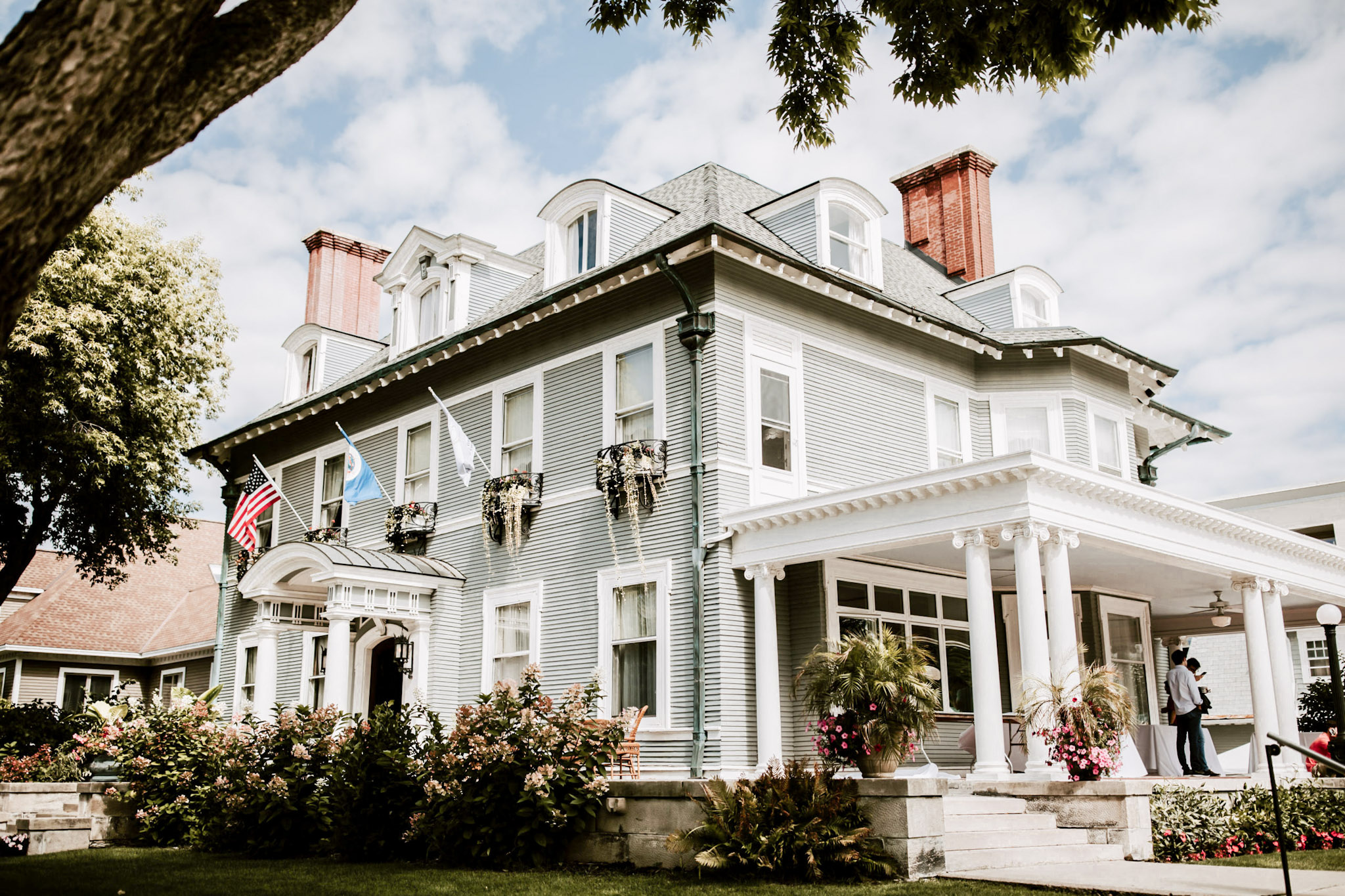
300 Clifton is the Eugene and Merrette Carpenter Mansion — Georgian in style, designed by Edwin Hewitt, at 300 Clifton Avenue in Loring Park. It is on the National Register of Historic Places, and the reason is worth knowing: Eugene Carpenter, who owned the house in 1906, led the effort that conceived and founded the Minneapolis Institute of Art.
He also worked on the City Charter and in the state legislature to make public support of the arts a civic obligation rather than a hobby of the rich. His line was that “art changes everything.” The thriving arts city Minneapolis is now is, in a real sense, downstream of this address. That is not a small claim for a bed and breakfast to make, but it is the documented one.
It is a roughly 20,000-square-foot estate, and more is known about its history than about almost any other mansion in the Twin Cities. The drawing room is still decorated with original 1906 lighting, paintings and furniture.
What makes it unusual is not the history. It is that you can book a room in it. Seven distinct guest rooms — the Crystal Mansion, the Georgian, the Grand Edwardian, the Coachman’s, the Forge, the Hayloft and the Estate Rooms. Guests get at the history through in-room information, QR codes placed around the estate, and staff who know the building. There is also a four-season garden hot tub and Gertrude’s Cistern, a speakeasy-style video lounge downstairs, neither of which the Gilded Age had.
The other mansion you can get inside
A mile or so south, the Charles S. Pillsbury Mansion at 100 East 22nd Street is now the Pillsbury Club. It is an English manor house filled with genuinely old English interiors — oak panelling and a staircase traced to Rotherwas Court in Herefordshire, a Tallow Chandlers fireplace that survived the Great Fire of London, ancient cathedral glass — brought over through the London dealer known as Charles of London.
Guided mansion tours run there year round; details are on the club’s experiences and tours page, and hours and policies are on plan your visit. Its History Journal is a genuinely deep archive if you want to read before you go.
The trolley route: eighteen mansions in one afternoon
If you want the sweep rather than one house, the Gilded Age Mansion Tour runs a vintage trolley past the great surviving houses. Some of what is on the route:
- Alden Smith Mansion, 1400 Harmon Place, 1887 — door and sash money, William Channing Whitney, Richardsonian Romanesque.
- George R. Newell Mansion, 1818 LaSalle, 1888 — the grocery firm that became Supervalu.
- George and Nancy Van Dusen Mansion, 1900 LaSalle, 1891 — grain milling and elevators.
- Ann and Frank Semple Mansion, 100 West Franklin, 1901 — by Franklin and Louis Long, the City Hall architects.
- Alfred Pillsbury House, 116 East 22nd Street, 1901 — Tudor Revival, another Pillsbury son.
- Edward and Sara Gale Mansion, 2115 Stevens Avenue, 1912.
- John Bradstreet and Eugene Merrill houses, 2116 2nd Avenue South, 1884 — Bradstreet was the first nationally known Minneapolis designer.
- Turnblad Mansion, 2600 Park Avenue, 1903 — French Renaissance Revival, built by a Swedish-American newspaper owner.
- Charles Harrington Mansion, 2540 Park Avenue, 1902 — 30,000 square feet, Italian Renaissance Revival, decorated by Bradstreet.
- Peavey (2210 Park), Sumner McKnight (2200 Park), Charles J. Martin (1300 Mount Curve) and the Winton Mansion (1324 Mount Curve, 1910, George Washington Maher, Prairie style).
Also on the route: Fair Oaks, Senator Washburn’s 1883 estate in what is now Washburn Park, and the Carolyn Christian Mansion at 2303 3rd Avenue South, 1920, also by Edwin Hewitt — the same architect as this house.
One thing to be clear about: this is a route, not eighteen front doors. Several of these houses are private, and several are institutional. The trolley shows you the city as a whole, and the two mansions above are where you actually walk inside.

Practical notes before you go
- Tours run year round. Historical tours and question-and-answer sessions accompany many of the Minneapolis Trolley Tours, which begin and end at the mansion.
- The trolleys start here. That is genuinely convenient if you are staying with us — see the trolley at 300 Clifton.
- Winter is a good time for this. Interiors photograph better than facades in January, and the trolley is heated.
For background on the National Register itself, the National Park Service explains what listing does and does not mean, and the Mill City Museum tells the story of the flour industry that paid for most of these houses. The Minneapolis Institute of Art — the museum Eugene Carpenter founded — is free to enter and about ten minutes away.
Stay in one
Touring a Gilded Age mansion takes an hour. Waking up in one takes a night. Check dates on our availability page, or start with specials and packages.
Related reading: where to stay for Thanksgiving in Minneapolis, and our 48-hour Minneapolis itinerary.
Keep reading: What Can You Do in Minneapolis on a Rainy Day? An Indoor Guide From a Loring Park Mansion