
Take a Gilded Age mansion tour in Minneapolis and you will hear a lot about architects and styles — Richardsonian Romanesque, Renaissance Revival, Tudor Gothic, Georgian. That is the fun part. But there is a better question hiding behind every front door on the route: where did the money come from?
Read the route that way and the mansions stop being a parade of big houses and turn into a map of an economy. Almost every fortune on the list is one of five things: trees, wheat, the machinery that moved wheat, the shops that supplied the people who worked with wheat, and the newspapers they read.
Trees: the lumber money
Minneapolis was a sawmill town before it was a flour town, and the lumber fortunes show up first. Eugene J. Carpenter made his in the Carpenter–Lamb lumber mill, and built at 300 Clifton Avenue — the house you are reading this on, designed by Edwin Hewitt in the Georgian style. (The tour list gives 1887/1906 for this site; our own FAQ dates the mansion 1906.) Sumner McKnight, also lumber, built at 2200 Park Avenue in 1892 in the Richardsonian Romanesque that was fashionable for exactly that generation.
Carpenter is the reason the house is sometimes called the birthplace of the arts in Minneapolis: the lumberman went on to help found what is now the Minneapolis Institute of Art, where general admission is still free every day it is open. You can read more about the house itself on our history page.

Wheat: the flour money
Then the Falls of St. Anthony turned Minneapolis into the milling capital of the world, and the houses got bigger. The route takes in the Charles S. Pillsbury Mansion at 100 East 22nd Street, listed on the tour as 1913 and now the Pillsbury Club; the Alfred Pillsbury House next door at 116 East 22nd, 1901, in Tudor Revival English Gothic; and Fair Oaks, Senator Washburn’s 1883 estate in what is now Washburn Park, at the root of what became General Mills.
The milling money did not stop at the founders. Charles J. Martin, secretary and treasurer of the Washburn Crosby Company, built at 1300 Mount Curve in 1903 to a William Channing Whitney design. The Carolyn Christian Mansion at 2303 Third Avenue South, 1920, belonged to the daughter-in-law of a Washburn Crosby milling inventor — and Edwin Hewitt designed that one too, which tells you how small this world was. And Edward and Sara Gale built at 2115 Stevens Avenue in 1912: real-estate money on one side of the marriage, a Pillsbury co-founder’s daughter on the other.
If you want the industrial half of that story rather than the domestic half, the Mill City Museum is built into the ruins of the mill that made it.
Elevators and implements: the money that moved the wheat
This is the category people miss. You did not have to grind the grain to get rich — you could store it or ship it.
- George and Nancy Van Dusen, grain milling and grain elevators, 1900 LaSalle, 1891, Renaissance Romanesque.
- Charles Harrington, president of Van Dusen’s company, the VanDusen–Harrington Company — 2540 Park Avenue, 1902, Italian Renaissance Revival, thirty thousand square feet, interiors by John Scott Bradstreet.
- George Peavey, son of a farm-implements and grain-elevator family, 2210 Park Avenue, 1907, Renaissance Revival.
Doors, groceries and hardware: selling to everybody else
The quieter fortunes on the route are the ones that supplied a booming city rather than exporting from it — and they are often the most interesting houses.
- Alden Smith made his money in the door and sash business and built at 1400 Harmon Place in 1887, William Channing Whitney, Richardsonian Romanesque. A city building this fast needed doors.
- George R. Newell, of the Stevens, Morse and Newell grocery business — the firm that eventually became Supervalu — built at 1818 LaSalle in 1888.
- Ann and Frank Semple, of Janny, Semple, Hill and Co. hard goods, built at 100 West Franklin in 1901. Their architects, Franklin and Louis Long, also designed Minneapolis City Hall.
- Eugene Merrill, described on the route as a baker and a lawyer, built at 2116 Second Avenue South in 1884 — another Whitney house, and one of the oldest on the list.

And one fortune made out of words
The odd one out is the best-known house on the route. Swan Turnblad owned a Swedish-American newspaper, and in 1903 he built the French Renaissance Revival pile at 2600 Park Avenue that is now the American Swedish Institute. No sawmill, no elevator, no grain contract — a print run.
What the map actually shows
Line the addresses up and you get the shape of the city’s wealth as it moved: Harmon Place and LaSalle in the 1880s, Park Avenue and Stevens through the 1890s and 1900s, Mount Curve after that. The styles move with the money — heavy Richardsonian stone for the first generation, lighter Renaissance and Georgian for the second, and English Gothic for the ones who wanted to look older than they were.
Most of these houses are on the National Register of Historic Places, and most of them are private. That is the honest caveat on any mansion tour: you are seeing a route, not eighteen open front doors.
How to see them
The Gilded Age Mansion Tour runs the route by vintage trolley and carries the full addressed list, with architects and dates for each house. It departs from the Pillsbury Club — itself one of the mansions on the list — and 300 Clifton guests can also board here at the mansion.
Two of the houses you can go inside properly. The Pillsbury Mansion runs guided tours year-round, and 300 Clifton is the one you can tour and sleep in — we set out which is which in Which historic mansions can you tour in Minneapolis? If you are bringing children along, they are welcome here too.
Staying a while rather than a weekend? Our sister property Oakland’s on 9th puts furnished studios in an 1889 downtown brownstone of exactly this vintage — built for people who worked for the families above rather than by them, which is its own kind of history.
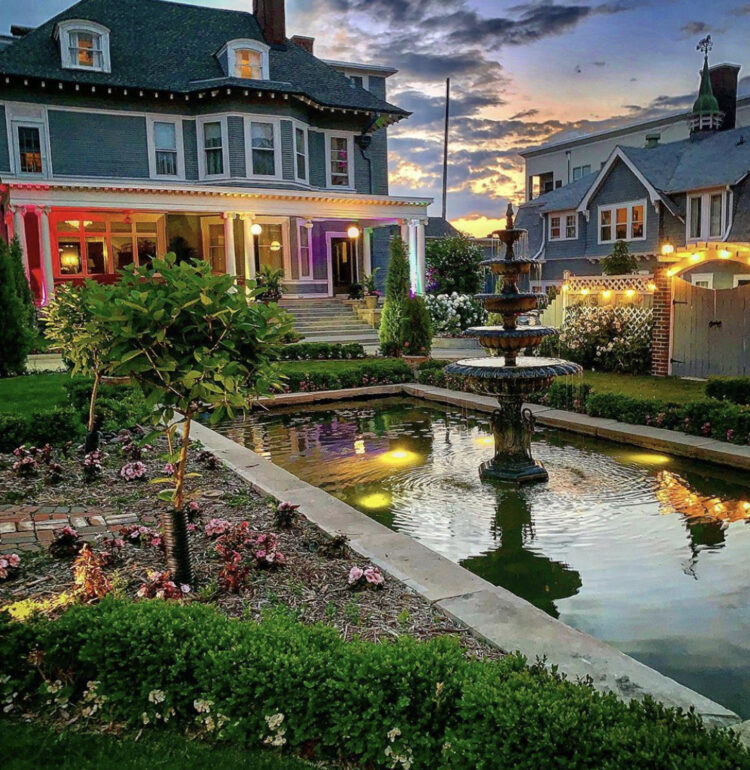
Come and stand in front of one. It is a different experience once you know that the man who built it sold doors, or sacks, or newsprint — and that he was showing his neighbours exactly how well it had gone. Plan a stay with us and start on the porch.
Keep reading: Where Should You Stay for a Timberwolves Game at Target Center?